Carbon Monoxide Detector Going Off? What to Do Right Now
A carbon monoxide alarm is not something to wait out. CO has no color and no smell, and it can make you sick before you notice anything is wrong. Here is what to do first, how to tell a real alarm from a low-battery chirp, and how a gas furnace can be the source.
If the alarm is going off right now
- Get everyone outside into fresh air. That includes pets. Do not stay inside to look for the source or to open every window.
- Call 911 from outside. Tell them your carbon monoxide alarm is going off, and whether anyone feels sick.
- Count heads. Make sure everyone who was in the house is out.
- Do not go back in until the fire department says it is safe.
- Do not run the furnace or other gas appliances again until the source is found and fixed.
If anyone has a headache, dizziness, nausea or confusion, say so when you call. Get medical help even if they start to feel better once they are outside.
Alarm, chirp or end of life?
Not every sound from a CO alarm means carbon monoxide. The patterns vary by brand, so check the label on the back of yours. In general:
- A loud, repeating pattern (on many models, four quick beeps and a pause) or a voice saying “carbon monoxide” means the alarm has detected CO. Treat it as real.
- A single short chirp about once a minute usually means the battery is low.
- A chirp that keeps going after a new battery often means the alarm has reached the end of its life. CO sensors wear out, and most alarms are meant to be replaced after several years. The replace-by date or the manufacture date is printed on the alarm.
A combination smoke and CO alarm uses different patterns for smoke and for CO. If you are not sure which one you are hearing, get out and call.
Symptoms of carbon monoxide poisoning
CO poisoning often feels like the flu. Watch for:
- Headache
- Dizziness or weakness
- Upset stomach or vomiting
- Chest pain
- Confusion or feeling sleepy
Clues that it may be CO and not a bug: several people (or pets) in the house feel sick at the same time, the symptoms get better when you leave the house, or they start when the heat comes on. People who are asleep can be overcome before they wake up, which is why a working alarm matters.
Where carbon monoxide comes from in a house
CO comes from anything that burns fuel. In a San Antonio home, the usual sources are:
- A gas furnace
- A gas water heater
- A gas range or oven
- A gas dryer
- A fireplace or gas logs
- A car, generator or gas lawn equipment running in an attached garage
Electric heat pumps and electric furnaces do not burn fuel, so they do not make CO on their own. Many homes with a heat pump still have a gas water heater, range or fireplace, so an alarm in an all-electric-heat house still needs to be taken seriously.
How a gas furnace can leak carbon monoxide
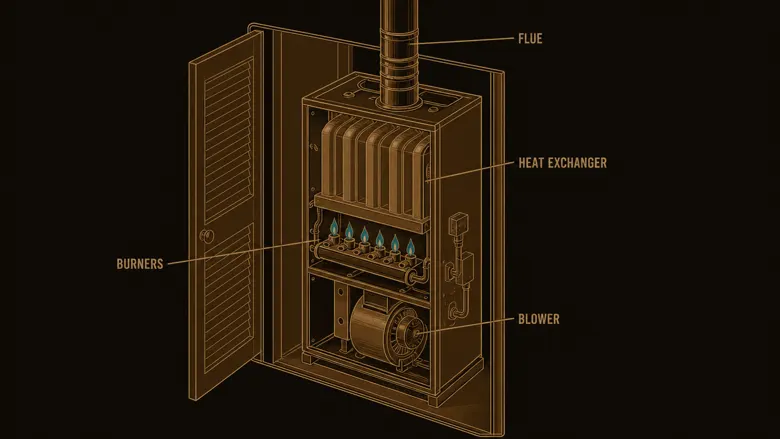
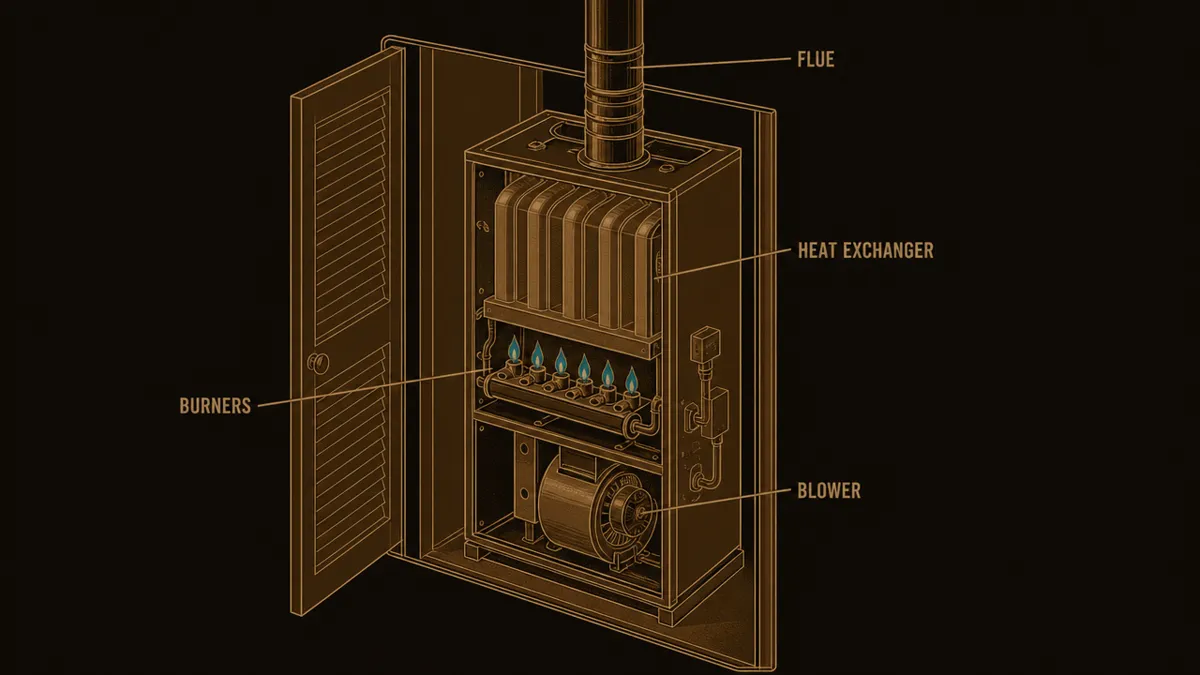
A gas furnace that is working right sends its exhaust up the flue and out of the house. CO gets into the living space when something in that path goes wrong:
1. A cracked heat exchanger. The heat exchanger keeps the burner exhaust separate from the air that blows through your vents. Years of heating and cooling can crack it. This is one of the more serious furnace problems. See the dangers of a bad furnace.
2. A blocked or loose vent pipe. A flue pipe that has come apart in the attic, or a vent blocked by a nest or debris, can push exhaust back into the house.
3. Poor burning. Dirty burners, the wrong gas pressure or a furnace that cannot get enough air to burn cleanly can make more CO than normal. A furnace closet packed with boxes can starve it of air. Lazy, yellow or flickering flames, or soot around the furnace, are warning signs.
4. A shared vent that is not drawing. In many homes the water heater and furnace share a vent. If the vent is not drawing well, exhaust can spill out at the water heater.
A burning smell is a different problem from CO, which has no smell at all. See heater smells like burning.
Can a CO alarm go off for no reason?
It happens, but do not assume it. Alarms past their replace-by date, low batteries and alarms mounted in the wrong spot can cause trouble. Check the manual for where your model should and should not go. Even so, treat every alarm as real until the fire department or a technician tells you otherwise. You cannot see or smell CO, so the alarm is the only warning you get.
If you smell gas instead
Natural gas has an added smell, often described as rotten eggs. That is a gas leak, not carbon monoxide, but it is just as urgent. Leave the house right away. Do not flip light switches, use the thermostat or start a car in the garage. Once you are outside, call 911 or your gas utility. In San Antonio that is usually CPS Energy.
How to protect your home
- Put a CO alarm on every level of the house and outside each sleeping area.
- Test your alarms every month and replace them by the date on the label.
- Have your gas furnace inspected every year before heating season. A tune-up checks the burners, the flue and the safety controls. See our maintenance plan and the most important furnace maintenance tasks.
- Keep the furnace closet clear so the furnace can get the air it needs.
- Never run a car, generator or grill inside a garage, even with the door open.
After the alarm: getting the furnace checked
Once the fire department has cleared the house, have a licensed technician check every gas appliance that could be the source before you use it again. For a gas furnace, that means the heat exchanger, the flue and vent connections, the burners and flame, and the gas pressure.
If a technician finds a cracked heat exchanger, the furnace should not be run until it is repaired or replaced. That can be a big decision on an older furnace. See the $5,000 rule for repair or replace and how long a furnace lasts.
Cowboy's answers 24/7 with our own dispatch on Blanco Road. See furnace repair in San Antonio, heating repair, or call (210) 495-7771.
Frequently asked questions
What should I do if my carbon monoxide detector goes off?
Get everyone, including pets, outside into fresh air. Call 911 from outside and do not go back in until the fire department says it is safe. Before you use the furnace or other gas appliances again, have them checked by a licensed technician.
Can a furnace cause carbon monoxide?
A gas furnace can, if the heat exchanger is cracked, the vent pipe is blocked or loose, or the burners are not burning cleanly. Electric furnaces and heat pumps do not burn fuel and do not make carbon monoxide on their own.
Why is my carbon monoxide detector chirping?
A single short chirp about once a minute usually means a low battery. If it keeps chirping after a new battery, the alarm has likely reached the end of its life and needs to be replaced. A real CO alarm is a loud repeating pattern, so check the label on your model.
Can a carbon monoxide detector go off for no reason?
Old alarms, low batteries and alarms in the wrong spot can cause problems, but you cannot see or smell carbon monoxide. Treat every alarm as real until the fire department or a technician says otherwise.
How often should a gas furnace be inspected?
Once a year, before heating season. An inspection checks the burners, the heat exchanger, the flue and the safety controls, which are the parts that keep exhaust out of your home.
Related service: furnace repair in San Antonio · heating repair · all heating and cooling services. Cowboy's AC answers 24/7 at (210) 495-7771.